

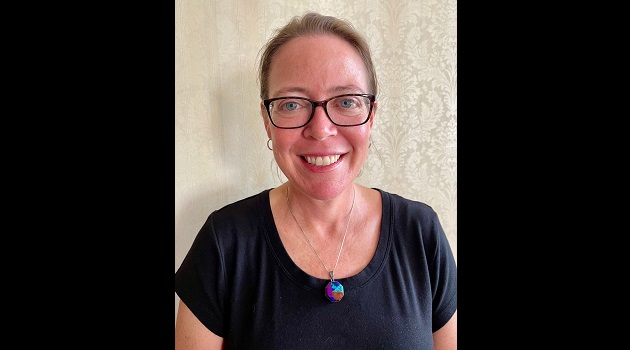
By Sarah Ostergaard
I have been skeptical of educational acceleration for a very long time. In fourth grade, I remember my teacher telling us that her job was to prepare us for fifth grade. At my elementary school back then, fourth graders had 15 minutes of morning recess, 30 minutes after lunch, and another 15 minutes in the afternoon. But fifth graders did not have afternoon recess, so our teacher decided that we needed to be prepared and she took away our afternoon recess. But the other two fourth-grade classrooms still had all the recess.
Maybe that experience shaped my skepticism toward pushing learning down into earlier grades in the name of preparation. Preparing students for what comes next is important; moving the next level into the current one is something different. Even at age 9, it felt off.
A strong education prepares students to advance by ensuring they have mastered where they are. The goal of education should be to ensure that students develop a durable foundation of knowledge, reasoning skills, and independent learning habits before advancing to the next level.
Math, for example. Advanced coursework has moved into middle school and parents can feel their child is behind if not in Algebra I and Geometry in 7th / 8th grades. But a middle schooler may be both exceptionally bright and not developmentally ready for abstract math. Math education is more than the ability to get the right answer. Middle-school students are still developing executive functioning, self-regulation, confidence, and the ability to comprehend abstract ideas. A student can be intellectually capable of more advanced mathematics without being developmentally ready. And that is ok. A student who takes Algebra I a year or so later after building a stronger foundation is not behind. There is no award for racing a child into Algebra I the earliest. The goal should be appropriate challenge, not maximum acceleration.
Similarly, now it is fashionable to earn actual college credit earlier and earlier. There are three ways a student may earn college credit while in high school: Advanced Placement (AP), International Baccalaureate (IB)*, and dual enrollment. All require a student to work hard and take responsibility and each awards the same 1.0 GPA weight bump, though each differs in academic focus and intellectual approach.
Advanced programs such as AP and IB can provide substantial intellectual challenge while maintaining the instructional scaffolding and developmental context of high school. They are a way of building students up through mastery rather than accelerating the next educational level down into high school. In AP, 9th-12th grade students select from a range of individual courses, each with a prescribed, comprehensive set of standards that moves at a demanding pace. In IB, students sustain rigorous academic work across disciplines over 11th and 12th grades while also engaging in research, writing, and reflective thinking. Both have the possibility of college credit upon passage of an exam (AP) or a combination of multiple exams and a research paper (IB). AP and IB are more challenging than on-level courses because they are college-level and because their rigor is deliberately structured, standardized, and sustained, but they remain grounded in the high school setting, with the support, sequencing, and developmental context of high school.
Dual enrollment courses accelerate technical college courses into high school and establish a college academic record as early as age 15. Dual enrollment can be adequately challenging, but its rigor depends on the institution, course, and delivery model and carries a unique academic risk: the grades are permanently on the student’s college transcript and may be considered in graduate school admission, transfer, scholarship, etc. far into the student’s future. Although some students are capable of successful acceleration, routinely pushing college coursework downward can prioritize speed of completion over mastery, and have long-lasting consequences if the student is not developmentally ready.
With so many choices, it is understandable to feel stress and confusion over courses. But there is no single right path for every student. Don’t be afraid to ask questions. Talk with counselors, attend school meetings, and ask what options are available for your child to build a solid educational foundation.
* Starting this year, the IB Diploma Program at Irmo High School is discontinued. The IB Diploma offered a cohort-like academic program involving rigorous courses across interrelated core subjects, a course on learning how to learn, a research paper, and involvement in school or community events. The less-scripted IB Career-related Certificate involves two IB courses, career courses, a course on professional skills, an essay about an ethical issue in the student’s career field, and service with a career-related organization.