

By Liesha Wessinger-Huffstetler
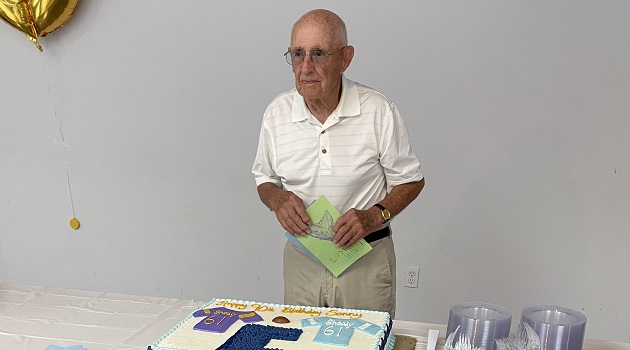
Let’s start at Zorba’s and stroll back in time to see the lumber yard. Sonny Shealy said rough lumber boards would be brought and taken through a machine to plane them and make them smooth. Sonny remembers that the shavings from the planer would be fed back to the steam engine, which powered the planer. Efficiency and thriftiness at its best. No one needed a clock to remind them when it was 8:00 a.m., 12:00 p.m., or 5:00 p.m. Sonny remembers that you could hear the whistle in the lumber yard all the way down Amick’s Ferry Road.
At noon, one could get the best hamburgers at Joe Chapman’s service station, now located where China Wok is. There was also a hot dog place owned by the Epting family, located at the corner of 76 and Boundary Street. You could wave at the Haskel and Eva Rauch Wessinger’s house on the hill where O’Riley’s is now.
Around the area of 76 and Boundary Street, Mr. Derrick operated a diesel grist mill, grinding Dutch Fork corn on Friday and Saturday mornings. Since we were a farming community, grinding corn was necessary to feed chickens and humans. Grits, bacon, eggs, and milk fresh from the milk cow was a typical breakfast. All organic and homegrown from your farm.
George Raymond “Whitey’ Wessinger lived on Boundary Street, where you would see his cotton and corn fields. His place was the area around the blueberry farm. He had a furniture store in town, and many shopped at “Whitey’s” store. He first sold cars at Central Chevrolet and sold the Town of Chapin its first fire truck in 1966. He started the Chapin Furniture Company in 1980; now, Wessinger’s Appliance is operated by his son, Delbert. I am proud to be kin to “Mr. Whitey.” Thomas Griffin, his grandson, is the Police Chief of Chapin. I hear that Mr. Whitey had the best mustard-based BBQ sauce; don’t you wish you had that recipe?
Sonny remembers the ball fields, now the Lexington County EMS station. Generations Assisted Living is the former homeplace, fields, and pastures of the Stockman family. George Hiller’s family owned all the land from their house to Glennwood Road. Winford Frick had a store in town and built furniture. Willie Wessinger had a shoe shop where he made and repaired shoes.
Imagine all roads in Chapin being dirt roads. Interstate 26 was constructed in the late 1950s. Mom remembers Amick’s Ferry being paved around that time also. Times necessitated hard work, but they were slower-paced. Everyone was related. We were literally one big family. Stay tuned for next week’s trip through Chapin’s history, where you will discover where the old crocket fields were in Chapin and more!