

By Liesha Huffstetler-Wessinger
Our modern culture really has no clue what real work looks like. Our forefathers in the bygone days worked harder than we can even imagine.
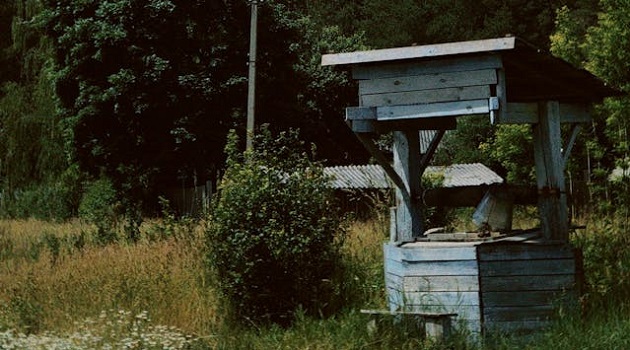
In the old days, running water was found in a river. Water for washing, drinking, and cooking was from a hand-dug well or natural spring. The finding of water and the digging of a well is a whole other topic!
Mrs. Francis’ Eleazer’s job as a child was to “fetch” the water. She had to lower the bucket using a rope attached to a pulley system. The water-filled bucket was “drawn up” and carried to its designated place. She gave water to the mule, cows, and chickens. Water was needed for the wood stove and for cooking. The water pail was where you got a drink from when thirsty. They all used the same water dipper!
Water was also “drawn” up, heated by fire in a wash pot, for the once-a-week bathing event on Saturday night. Everyone went to church clean on Sunday! She said that they had a “sponge bath” during the week when needed. Water was also “drawn” up to wash clothes. Wash pots were filled with water and heated by fire. Lye soap was added to the boiling hot water, and dirty clothes swished around with a wooden paddle. The clothes were then transferred to another pot for rinsing, put through a ringer, and hung on the clothesline. Washdays were usually one day a week, usually on Saturday. People had school clothes, play clothes, and Sunday clothes. She said she put on her play clothes after school to do the chores.
She remembered playing hopscotch, jump rope, marbles, and playing on “see-saws,” as well as “follow the leader.” Of course, red rover, red rover, send an Eleazer child right over! The girls also made baby dolls with cloth. No one played cards,” she said; they considered that a type of gambling.
She liked to ride bikes. The girls rode their bikes wearing dresses, bloomers, and stockings. She said the shoes were like boots and went to the ankle. Her mom and grandma wore stockings, which were long socks that reached above the knee and had elastic to hold them up.
One of her hated chores was “poisoning the cotton,” to kill the boll weevil. She took a mixture of arsenic, old molasses, and rags to the cotton field, dipped the cotton rags in the mix, and brushed it on the plants. The arsenic was bought at Worth Goza’s store in Chapin. She also picked cotton, with a bag hung over her shoulder. This was hot, hard work, and she was one of many children in the area who picked cotton in their families’ fields. Her dad would take the cotton to the gin by horse and wagon, and the cotton was put in a bale.
Remember, this was the 1920s and 1930s, and these were everyday chores of life. It was common for children to help pick cotton, which was grown in the area as a cash crop. Life was hard, but oh, how much could her generation teach us today.