
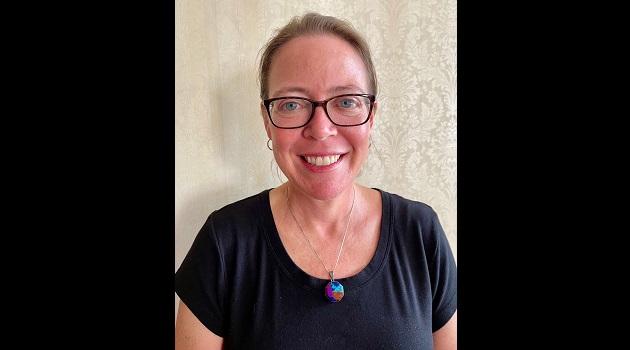
By Sarah Ostergaard
What is your idea of a strong education? Please answer that question for yourself before continuing to read this article. I welcome your thoughts; feel free to reach out.
Almost 3 years ago, I wrote that the “American purpose of an education is to prepare young people to be productive citizens, contributing members of society and informed members of our participatory democracy” and therefore we all “need those who can consider a complicated issue from multiple points of view and collaborate with others to reach a solution” (New Irmo News, July ‘23).
For centuries, educational philosophy centered on the idea of the trivium: well-rounded education starts with knowledge, advances to understanding, and progresses to wisdom. Learn fundamental facts and vocabulary (knowledge), connect facts and analyze cause-and-effect relationships (understanding), and synthesize information to create new conclusions, generate improvements, and avoid the same mistakes (wisdom).
This progression unfolds both within individual courses and across a student’s K–12 experience.
In a high school course like Personal Finance, students begin with terms such as interest rate, income, and insurance. They apply that knowledge to choose appropriate financial tools. They move further by building a realistic household budget that includes saving for a home and retirement.
The same pattern holds in history and literature. In studying the Civil War in U.S. History, for example, a student learns facts like the war began in 1861 after secession, then understands how conflicts over states’ rights and slavery drove the division, and gains wisdom by recognizing why unresolved tensions can fracture a nation. In reading To Kill a Mockingbird, a student learns facts like new vocabulary, plot, and setting, then recognizes how prejudice and morals shape the characters’ actions, and considers how integrity can lead one to stand for justice even in difficult times.
Grappling with the Civil War can be emotionally difficult. Students confront the reality of why the nation was torn apart and wrestle with suffering and racial divisions. Reading To Kill a Mockingbird can be unsettling. Narratives of injustice, racial prejudice, and right vs. wrong choices are uncomfortable.
In addition, an external unease exists. South Carolina’s Partisanship Curriculum proviso prohibits using funding from the SC Department of Education “to inculcate [the concept that] an individual should feel discomfort, guilt, anguish, or any other form of psychological distress on account of his race or sex” (S.C. Proviso 1.79, 2025). Versions of Proviso 1.79 have continued to be reauthorized.
This is a subjective standard, and teachers walk a tightrope that bends and sways to individual preferences, beliefs, and sensitivities. There is little guidance (read: protection) since courts have not decided a threshold for what it means to inculcate discomfort, and counsel from lawmakers has been scarce.
However, growth in education has never come from comfort. When students move beyond facts to truly understanding and applying them, they must confront complexity, contradiction, and moral weight. Discomfort signals that learning has deepened, that assumptions are being examined, empathy is being stretched, and ideas are being tested against evidence. Shielding students from unease risks producing citizens who know information but cannot understand or apply it. If we intend to cultivate thoughtful, resilient leaders, we must allow space for the kind of intellectual and emotional tension that strengthens discernment rather than avoids it.
Experiencing discomfort in the classroom does not require students to abandon or compromise their family’s beliefs; rather, it invites them to examine ideas carefully, weigh evidence thoughtfully, and articulate their convictions with greater clarity. It also opens space for parents to guide conversations and reinforce their values at home. Engaging challenging material in this way strengthens maturity and discernment, helping students hold their beliefs with both confidence and wisdom.